Industrial Bag Filter Systems
Engineering and industrial dust collection systems designed around process conditions, particulate characteristics, airflow requirements and the operating needs of each plant.
A bag filter is not simply a collection of filter bags. It is an integrated system in which filtration, airflow, cleaning, dust discharge and maintenance access must work together.
What Is an Industrial Bag Filter?
An industrial bag filter, also known as a baghouse, is a dry dust collection system that separates particulate matter from a gas stream by passing the gas through fabric filter elements. Dust is retained on the fabric surface while the filtered gas passes through the media and leaves the collector.
The collected dust is periodically removed from the filter elements through a cleaning arrangement suited to the equipment design. The released material falls into the hopper and is transferred through the designated discharge equipment.
Baghouse systems are used in industrial processes where particulate control, process cleanliness and dust collection are important operational requirements. Their configuration depends on the gas stream, dust properties, process layout and the required operating strategy.
How Does a Baghouse Work?
The operating sequence combines gas distribution, filtration, dust collection and filter cleaning. The exact arrangement varies according to the system configuration and cleaning method.
- Gas inlet
Dust-laden gas enters the collector through the inlet duct and is directed into the filtration area. - Particle separation
Gas passes through the filter media while particulate matter is retained on the fabric surface. - Dust accumulation
A dust layer develops on the filter media during operation and contributes to the filtration process. - Filter cleaning
The cleaning system removes accumulated dust according to the selected cleaning technology. - Dust discharge
Released dust moves into the hopper and is handled by the discharge arrangement. - Clean gas outlet
Filtered gas leaves the collector through the clean-air section and outlet duct.
Main Components of an Industrial Bag Filter
Each component has a defined role in the overall filtration process. The equipment should be considered as an integrated assembly rather than as a collection of unrelated parts.
Filter Housing
The structural enclosure that contains the filtration elements and separates the relevant gas-flow areas.
Filter Bags
Fabric filtration elements selected according to process conditions, dust characteristics and operating requirements.
Bag Cages
Supporting structures that help maintain the intended shape and position of the filter bags.
Cleaning Assembly
The mechanism used to remove accumulated dust from the filter elements, depending on the selected cleaning method.
Hopper and Discharge
The lower section and associated equipment that collect and transfer separated dust from the collector.
Fan and Ducting
Air-handling components that connect the collector to the process and support the required gas movement.
Industrial Installation and Ducting
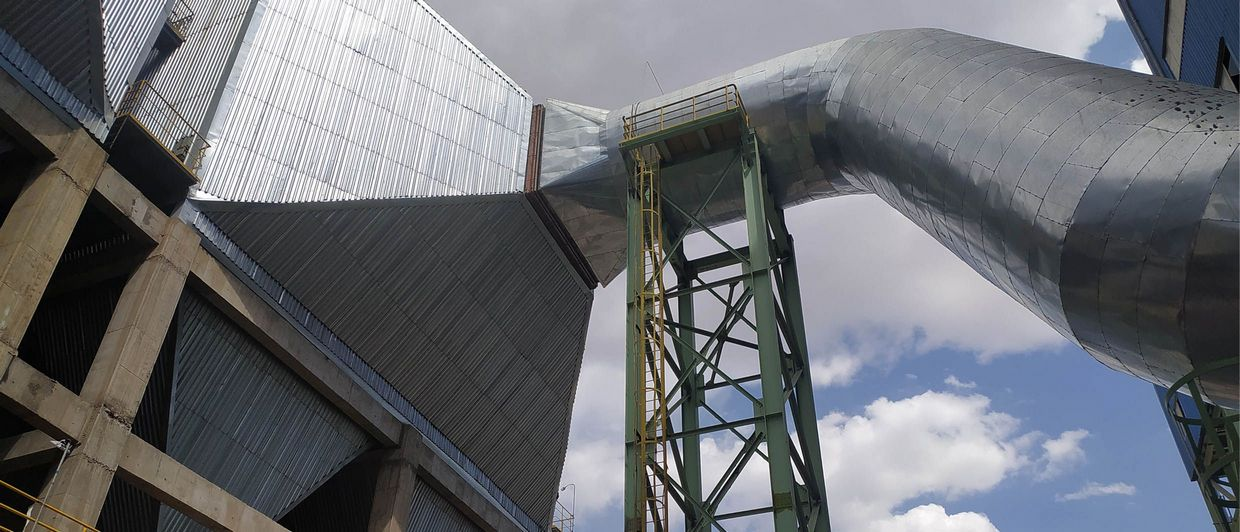
The collector must be integrated with the plant's process equipment, gas collection points and ducting network. Inlet arrangement, gas distribution, access for maintenance and the position of the dust discharge equipment all influence the practical design.
For this reason, the engineering review should consider the complete gas path—from the dust generation points to the collector and the clean-gas outlet—not only the filter housing itself.
Explore the broader scope of industrial dust collection systems and their role in plant-level dust control.
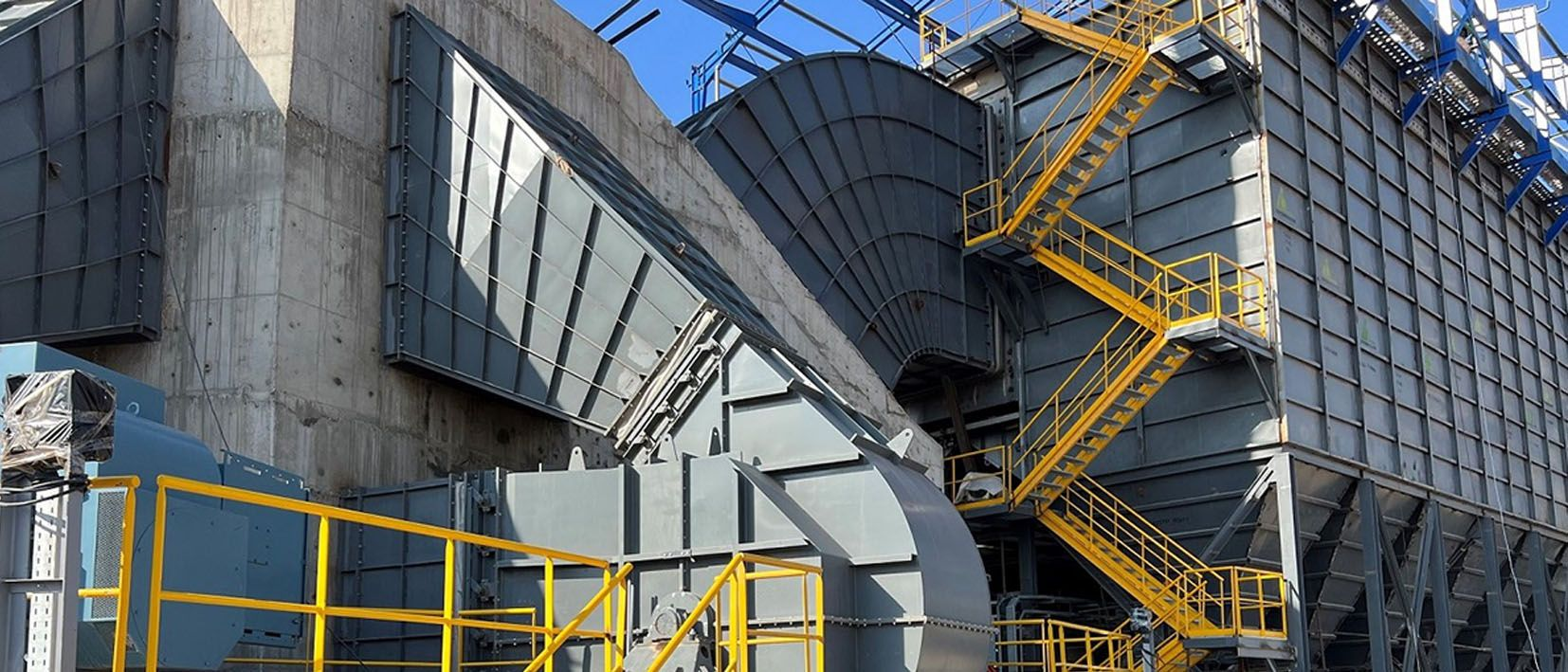
Industrial baghouse project image. The image illustrates an installation; it does not represent a universal system configuration.
Choosing the Right Bag Filter Configuration
- Equipment selection begins with a clear understanding of the process. A suitable configuration cannot be determined from the collector name or nominal airflow alone. The engineering assessment should include the following considerations:
- Gas flow: operating airflow and the process conditions under which the collector will run.
- Dust characteristics: particle properties, dust loading, abrasiveness, moisture and other relevant material characteristics.
- Gas conditions: temperature, humidity and any process-specific conditions that may affect the filtration media or equipment.
- Filter media: fabric type and construction selected for the actual operating environment.
- Air-to-cloth ratio: a design consideration that must be assessed in relation to the process and cleaning arrangement.
- Pressure drop: the resistance across the filtration system and its relationship with fan selection and operating conditions.
- Cleaning method: the appropriate cleaning arrangement and its compatibility with the filter elements.
- Dust handling: hopper design, discharge equipment and the route for collected material.
- Maintenance access: inspection space, replacement access and practical service requirements.
Engineering principle: the filter media, cleaning system, fan, ducting and dust discharge arrangement should be evaluated together. Changing one part of the system may affect the operating conditions of the others.
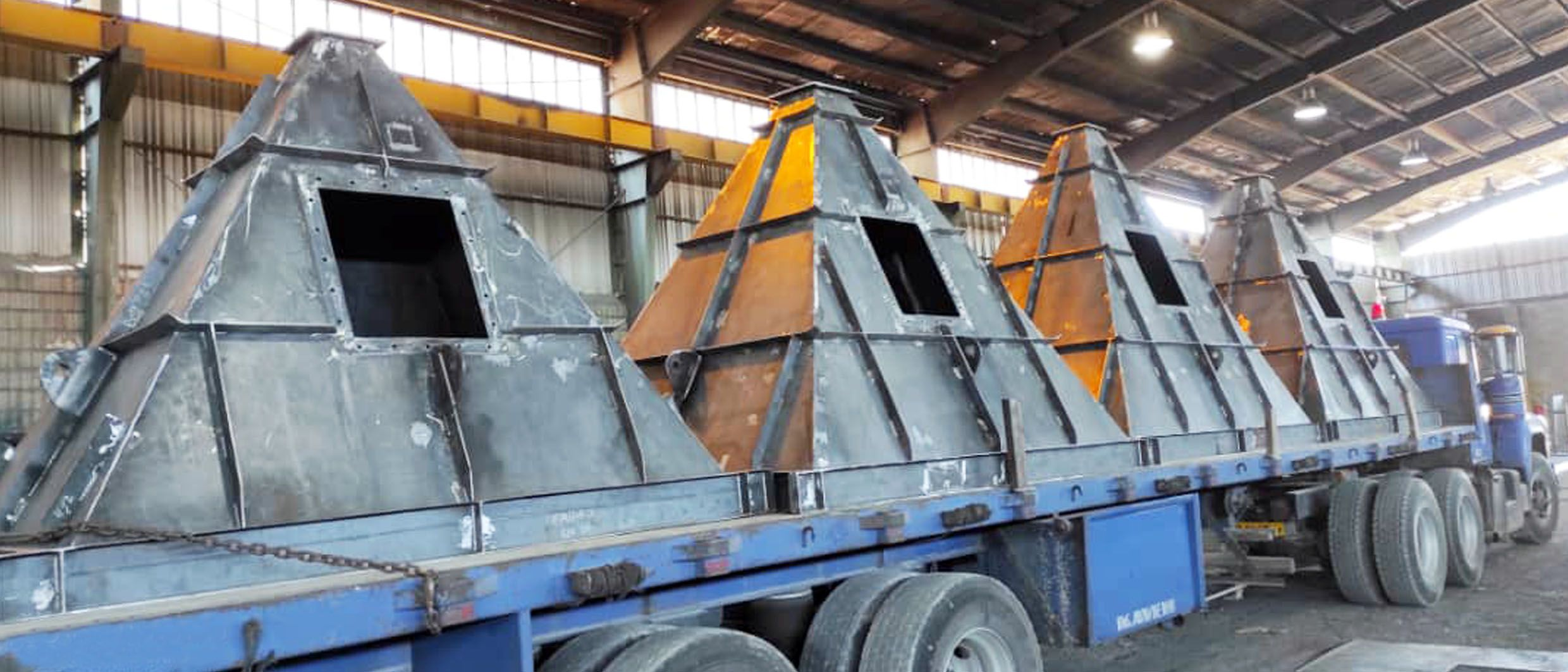
Hopper and dust discharge equipment are important parts of the complete collection system.
Dust Collection and Discharge
After separation from the gas stream, collected dust must be transferred out of the filter housing in a controlled manner. The hopper and discharge equipment should be compatible with the properties of the collected material and the plant's downstream handling arrangement.
Material flow, access for inspection, sealing and coordination with downstream conveying equipment are among the points to review during design.
Where collected material must be transferred to another process area, the collector can be considered alongside the plant's bulk material handling system.
Bag Filter Cleaning Technologies
Industrial bag filters can use different cleaning arrangements. The appropriate method depends on the equipment design, operating cycle, dust properties and process requirements.
Pulse Jet Cleaning
Uses short compressed-air pulses to clean filter bags. The system may include air tanks, diaphragm valves, blow pipes and control components.
Filter Media
The filter bag is a key part of the separation process. Its material and construction must match the actual gas and dust conditions.
Baghouse Components
Supporting components help maintain the correct arrangement and operation of the filtration assembly.
Inspection and Maintenance Considerations
Routine inspection helps identify operating changes and component conditions that may require attention. The inspection plan should be adapted to the equipment design and plant operating procedures.
- Review operating pressure drop and compare it with the system's established operating records.
- Inspect filter bags for visible damage, wear, incorrect installation or signs of dust leakage.
- Check the cleaning assembly and its operating sequence according to the equipment design.
- Inspect the hopper and discharge equipment for material accumulation or interrupted flow.
- Review ducting, access doors and connections for signs of leakage or unwanted air entry.
- Keep maintenance records to help identify recurring issues and changes in operating behaviour.
Abnormal pressure-drop behaviour, visible dust carryover, irregular cleaning or unusual material accumulation should be investigated in the context of the complete system.
BEHINSA Industrial Filtration Capabilities
BEHINSA provides engineering services in the field of industrial air pollution control, including the design, fabrication, installation and commissioning of bag filter and baghouse systems, alongside related ducting and air-handling work.
The company's project experience and engineering scope are presented as part of its organizational profile. System configuration and component selection are considered in relation to the requirements of each industrial application.
Learn more about BEHINSA and its engineering capabilities, or visit the official BEHINSA website for further company information.
Frequently Asked Questions
What is the difference between a bag filter and a baghouse?
The terms are commonly used to describe fabric-based industrial dust collectors. In practical use, baghouse often refers to the complete collector assembly, while bag filter may refer to the equipment or the filtration arrangement.
How does an industrial bag filter separate dust from gas?
Dust-laden gas passes through fabric filter elements. Particles are retained on the filter media while the filtered gas passes through the fabric and moves toward the clean-gas outlet.
Which factors influence bag filter selection?
Important factors include gas flow, dust characteristics, temperature, humidity, filter media, cleaning method, pressure drop, fan requirements and the dust discharge arrangement.
Are all bag filters cleaned using Pulse Jet technology?
No. Pulse Jet is one cleaning approach. The suitable cleaning arrangement depends on the equipment design and the operating requirements of the process.
Why should the hopper and discharge system be considered during design?
Separated dust must be collected and transferred out of the equipment. The hopper and discharge arrangement therefore form part of the overall system design and should suit the properties and handling requirements of the collected material.
Can the filter bags be selected independently of the collector?
Filter bags should be selected in relation to the gas conditions, dust properties, cleaning method and equipment arrangement. A media choice should not be made without considering the operating conditions of the complete system.
Explore Related Industrial Solutions
Continue to related BEHINSA pages for more information about industrial dust collection, filtration equipment and system components.
Discuss Your Industrial Filtration Requirements
Every process has its own gas conditions, dust characteristics and plant layout. Contact BEHINSA to discuss your application and the engineering considerations for an industrial bag filter system.
Contact BEHINSAContact BEHINSA
Contact our engineering team for industrial dust collection, bag filter design, manufacturing and technical consultation.
BEHINSA | Industrial Bag Filter Systems | Shiraz, Iran
